
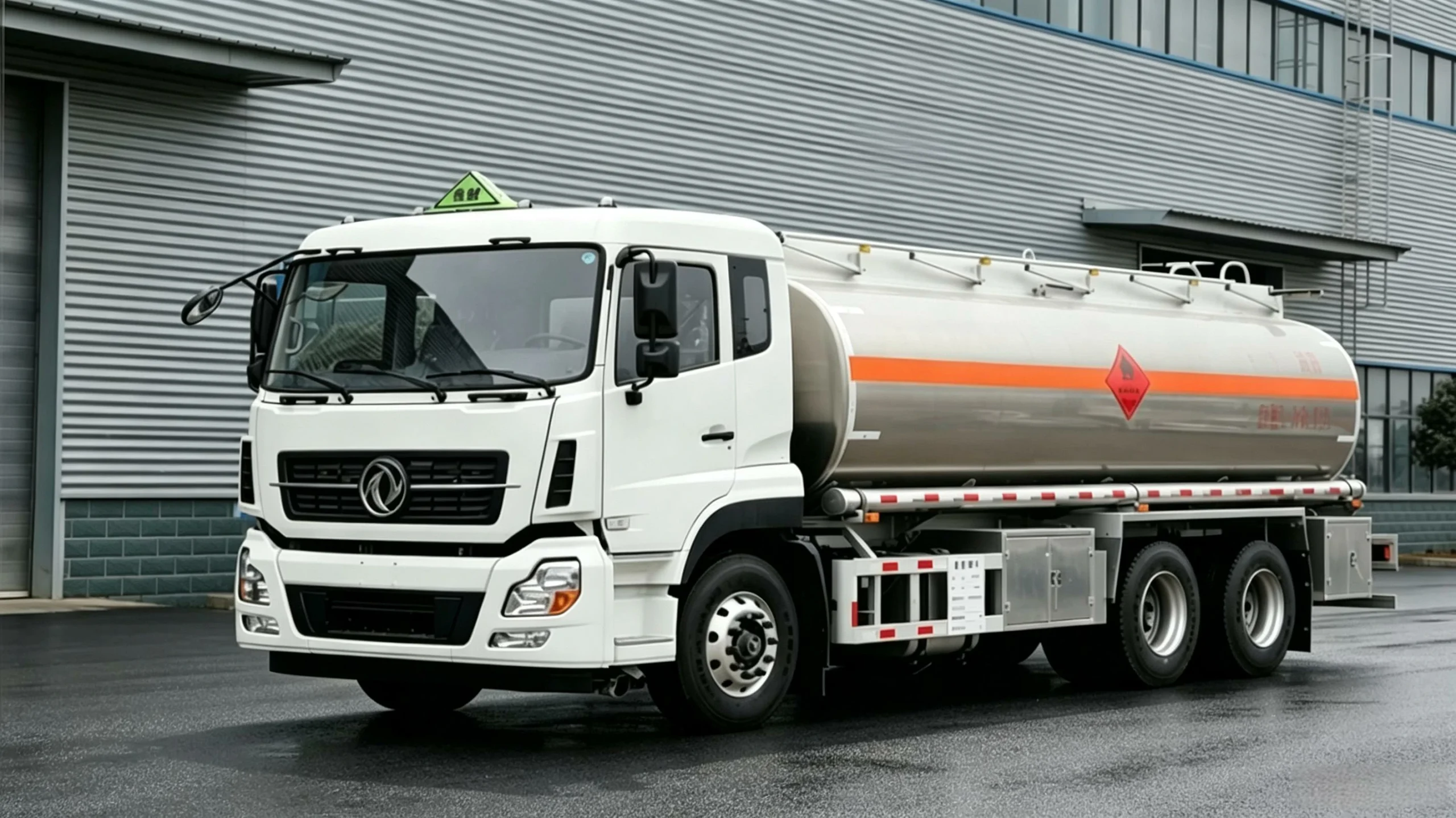
Every fleet manager in the petroleum logistics industry faces the same dilemma: how to transport more fuel per trip without exceeding legal weight limits or compromising safety. The answer lies in optimizing your oil tanker truck capacity — not by overfilling, but by applying smart design, loading procedures, and compliance checks. When you maximize oil tanker truck capacity correctly, you reduce trips, cut fuel costs, and improve overall efficiency. However, pushing beyond safe limits leads to fines, accidents, and equipment damage. This article outlines five essential safety rules that help you achieve maximum oil tanker truck capacity while staying fully compliant.
.
Rule 1: Understand Your Vehicle’s GVWR and Payload Limits
The first step to maximizing oil tanker truck capacity is knowing exactly what your truck can legally carry. Gross Vehicle Weight Rating (GVWR) includes the tractor, trailer, fuel, driver, and cargo. Subtract the tare weight from GVWR to get the maximum payload. Many operators mistakenly assume that larger tanks automatically mean higher oil tanker truck capacity, but axle weight distribution and tire ratings also matter. Always consult the manufacturer’s specifications and weigh each compartment before loading. By accurately calculating usable oil tanker truck capacity, you avoid overweight violations that cost thousands in penalties.
Rule 2: Use Load Planning Software for Optimal Distribution
Modern technology makes it easier than ever to squeeze every gallon out of your oil tanker truck capacity. Load planning software accounts for product density, temperature expansion, and compartment geometry. For example, diesel expands in heat; if you fill to 100% at 60°F, the volume could exceed tank limits at 90°F, reducing effective oil tanker truck capacity due to required ullage. Advanced algorithms suggest the ideal fill level per compartment to balance weight across axles while hitting maximum oil tanker truck capacity. This not only prevents overloading but also improves handling and braking performance. Investing in such tools pays off quickly through fewer trips and lower maintenance.
Rule 3: Train Drivers on Proper Loading and Ullage Management
Even the best-planned oil tanker truck capacity fails without skilled drivers. They must understand ullage — the empty space left in each compartment to allow for thermal expansion and prevent spills. A common mistake is topping off compartments manually, which reduces actual oil tanker truck capacity because foam and vapor occupy volume. Instead, use automatic shut-off nozzles calibrated to your specific oil tanker truck capacity targets. Drivers should also monitor the vehicle’s tilt angle during loading on uneven ground; an unlevel tank can distort compartment readings, leading to underutilized oil tanker truck capacity or hidden overload. Regular training sessions keep these practices fresh and reinforce safety culture.
Rule 4: Conduct Pre-Trip Inspections Focused on Capacity Components
Before every journey, inspect components that directly affect oil tanker truck capacity: baffle integrity, vent valves, and emergency shutoff systems. Damaged baffles allow liquid surge, which forces you to leave extra headroom — effectively lowering usable oil tanker truck capacity. Similarly, clogged vents cause pressure buildup that triggers premature shutoffs during filling, wasting potential oil tanker truck capacity. Check tires for proper inflation; underinflated tires reduce load rating and limit legal oil tanker truck capacity. Document all inspections to demonstrate compliance with DOT regulations. A well-maintained tanker consistently delivers its rated oil tanker truck capacity trip after trip.
Rule 5: Stay Updated on Regional Weight Laws and Permits
Legal oil tanker truck capacity varies by state and country. In the U.S., interstate highways allow up to 80,000 lbs GVW, but many states have lower limits on secondary roads. Some regions offer oversize/overweight permits that temporarily increase allowed oil tanker truck capacity for specific routes. However, these permits come with strict conditions — route restrictions, escort vehicles, and time windows. Ignorance is no excuse; fines for exceeding permitted oil tanker truck capacity can reach tens of thousands of dollars. Subscribe to regulatory updates and integrate them into your dispatch system. When you align operations with local laws, you unlock every bit of legal oil tanker truck capacity available..
Maximizing oil tanker truck capacity is not about taking risks — it’s about working smarter within established boundaries. By understanding your vehicle’s limits, leveraging technology, training drivers, inspecting equipment, and respecting regional laws, you can safely push your oil tanker truck capacity to its full potential. Each rule reinforces the others: accurate planning enables better loading, trained drivers maintain that plan, and compliance ensures repeatability. Remember, the goal isn’t just higher oil tanker truck capacity per trip — it’s sustainable profitability without accidents or fines. Implement these five rules today, and watch your operational efficiency rise while risk falls..
Subscribe to our free newsletter
We provide specialized vehicles designed for reliable operation in extreme environments.
Our Privacy Policy .